
Aging in Place Interior Design: How My Healthcare Experience Helps Create Safer, Beautiful Homes
Discover how healthcare-informed interior design creates safer, stylish homes for aging in place. Learn how thoughtful design supports comfort, independence, and dignity.
Susan C Kesner
4/19/20262 min read
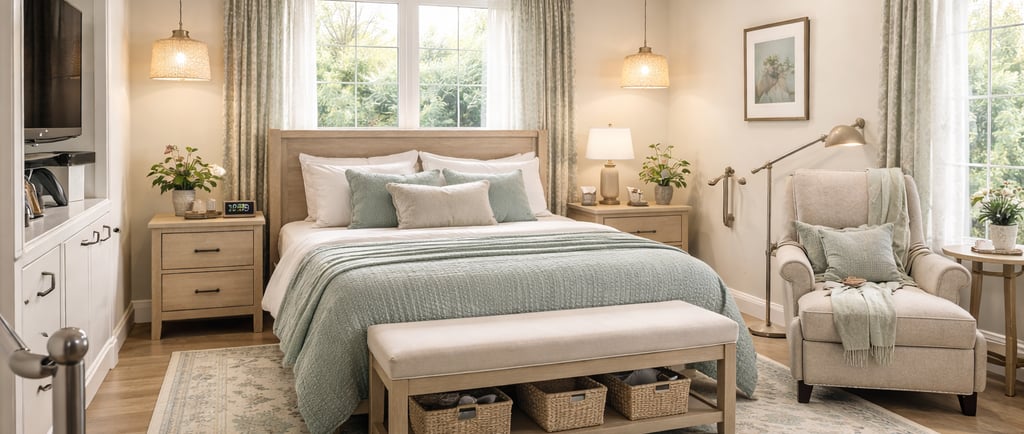
Before I ever designed a room, I spent years caring for people.
My background is rooted in healthcare—working in nursing, hospice care, assisted living, and memory care. I’ve walked alongside individuals and families during some of the most vulnerable seasons of life. And through those experiences, I learned something that never left me:
The spaces we live in have a profound impact on how we feel, function, and live day to day.
I’ve seen beautifully decorated homes that didn’t support the people living in them.
And I’ve seen simple spaces that, with just a few thoughtful adjustments, made someone feel safe, independent, and at ease again.
That’s where my approach to design began to shift.
Design Is More Than How a Room Looks
For many people, interior design is about aesthetics—colors, furniture, and finishes. And yes, those things matter. Beauty matters.
But after working in healthcare, I see homes differently.
I notice:
How easily someone can move through a space
Whether lighting supports aging eyes
If a chair is comfortable and easy to get out of
Whether a bathroom creates confidence or risk
These details aren’t just functional—they’re deeply personal. They affect independence, dignity, and quality of life.
Most Homes Aren’t Designed for Real Life
The truth is, most homes aren’t designed with changing needs in mind.
They’re built for a moment in time—not for the reality that our bodies, abilities, and circumstances evolve.
What I’ve seen, again and again, is that people wait until there’s a problem:
A fall
A health diagnosis
A sudden shift in mobility
And then design becomes reactive instead of proactive.
But it doesn’t have to be that way.
Thoughtful Design Supports Independence
The goal isn’t to make a home feel clinical.
It’s the opposite.
It’s about creating spaces that feel warm, beautiful, and personal—while quietly supporting the people who live there.
Sometimes that looks like:
* Choosing furniture that offers both comfort and stability
* Improving lighting in ways that feel natural and inviting
* Reworking layouts to reduce strain and increase ease
* Incorporating supportive elements that blend seamlessly into the design
When done well, these changes are almost invisible—but their impact is life-changing.
This Is Why I Do This Work
Design, for me, is not just about creating beautiful rooms.
It’s about creating spaces where people can:
Feel safe
Maintain independence
Experience comfort and dignity
Continue living fully in their own homes
My healthcare background didn’t just influence my work—it defined it.
It allows me to see what others might miss and to design in a way that truly supports real life.
If You’re Thinking About Your Space…
Whether you’re planning ahead, supporting a loved one, or simply wanting your home to function better, small, thoughtful changes can make a meaningful difference.
You don’t need to overhaul everything.
You just need to start with intention.
If you’re ready to create a space that feels as good as it looks, I’d love to help guide that process.
Next blog: 10 improvements that you can be made now. Please check back next week!